
An outlook suggests a wetter-than-usual period, and a reader translates it into rain at a particular afternoon event. That jump asks the forecast to provide detail at a scale it may not claim to support.
The Met Office’s explanation of forecast timescales distinguishes detailed near-term forecasts from broader guidance further ahead. The time horizon affects the type of information available.
Start by recording the geographical area and period covered. A national outlook for several weeks is not interchangeable with a forecast for one town at three o’clock. Even if both use the word wet, they may answer very different questions.
In a fictional community event plan, a broad outlook could prompt organizers to review their wet-weather arrangements. It would not justify announcing the exact hour when a shower will arrive. That operational detail requires appropriate forecasts closer to the event and continued monitoring.
Read the wording before making it a headline
Preserve terms that describe uncertainty or departures from normal. Do not replace a tendency with certainty merely to make a social post shorter. If a headline says the outlook covers a month, keep that period visible in the accompanying explanation.
As the date approaches, move to the forecast product suited to the decision and follow relevant official advice. An outlook can support preparation without pretending to be a timetable. Knowing which question it answers is more useful than treating all forecasts as competing predictions of the same thing.
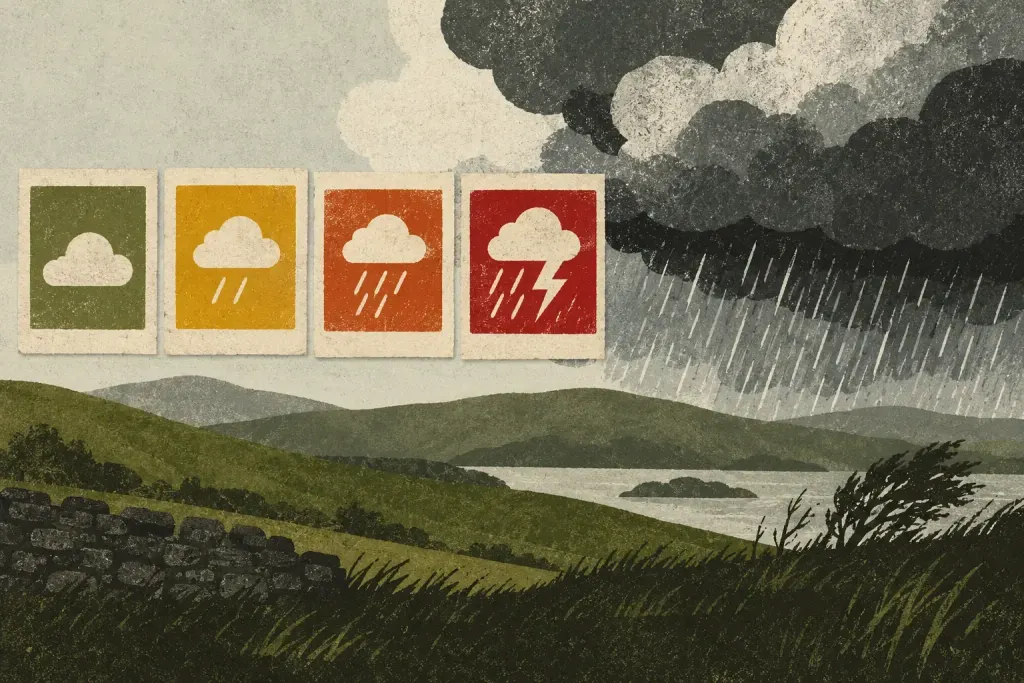
Image: an editorial illustration, not a documentary photograph.